Chester, Maryland
Old school Brazilian jiu jitsu
Learn to grapple. Learn to strike. Keep showing up.
Adult pricing starts at $150 a month. Adult and teen memberships include every class on the schedule. Youth pricing starts at $125 a month. Family, military, and public servant discounts are available. Discuss them during your free trial week.
“There is no losing in jiu-jitsu. You either win or you learn.”
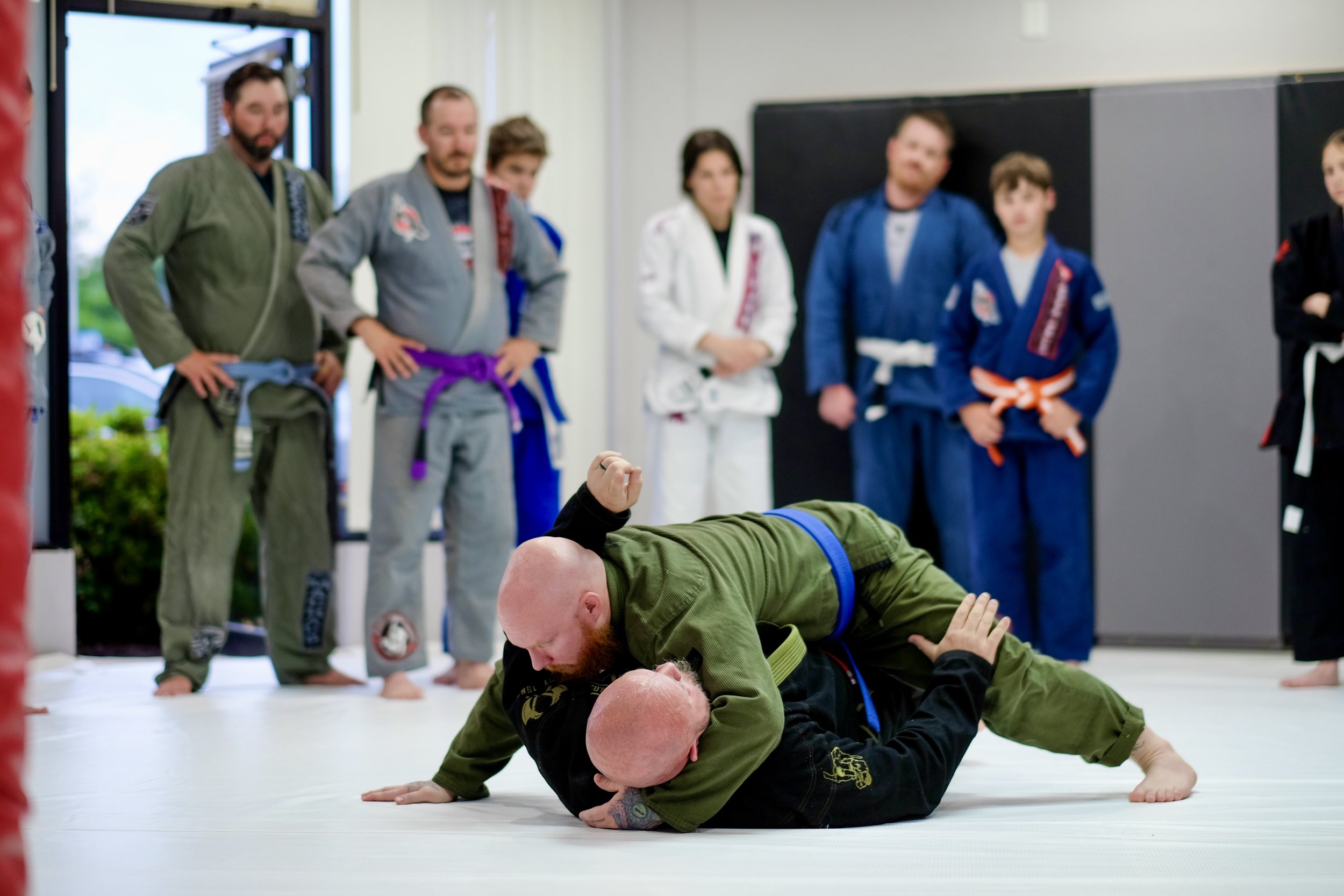
What training at Ronin builds
- Build confidence
- Develop discipline
- Sharpen focus
- Real-world self-defense
- All ages / all levels
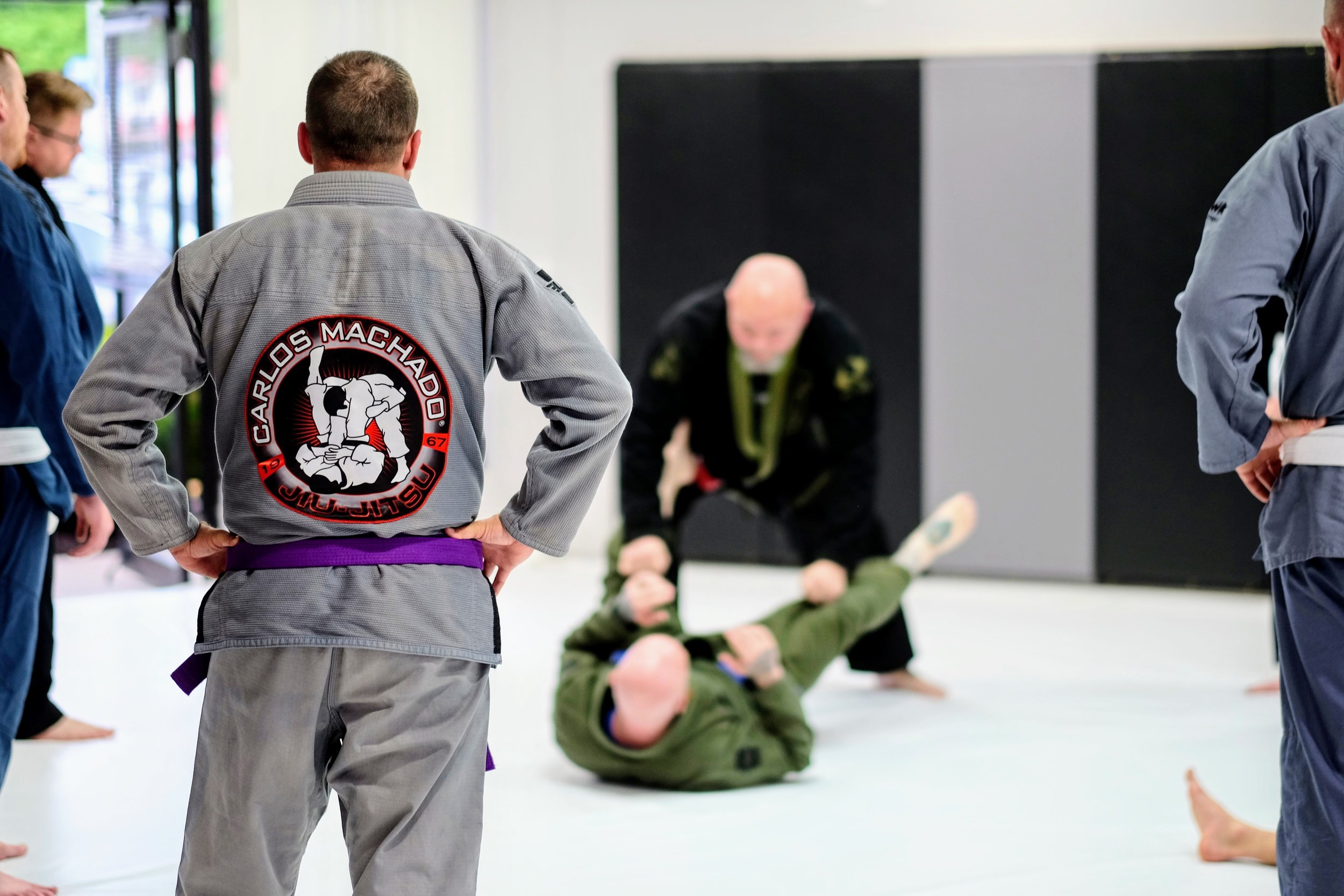
What is Brazilian Jiu‑jitsu?
A first class starts with a warm-up, then a lesson you can see and ask about, then drilling with a partner. Live rolling comes after that, and only when you’re ready. Brazilian jiu-jitsu (BJJ) is a self-defense martial art and combat sport based on grappling and ground fighting. Beginners stay with the warm-up, the lesson, and partner drills, and roll only when they’re ready.
the Ronin BJJ Difference
Rated the Shore’s No. 1 martial arts academy for the 7th consecutive year by Shore Update, Ronin BJJ teaches a wide range of BJJ techniques on a strong self-defense foundation.
There’s a method behind
what we do.
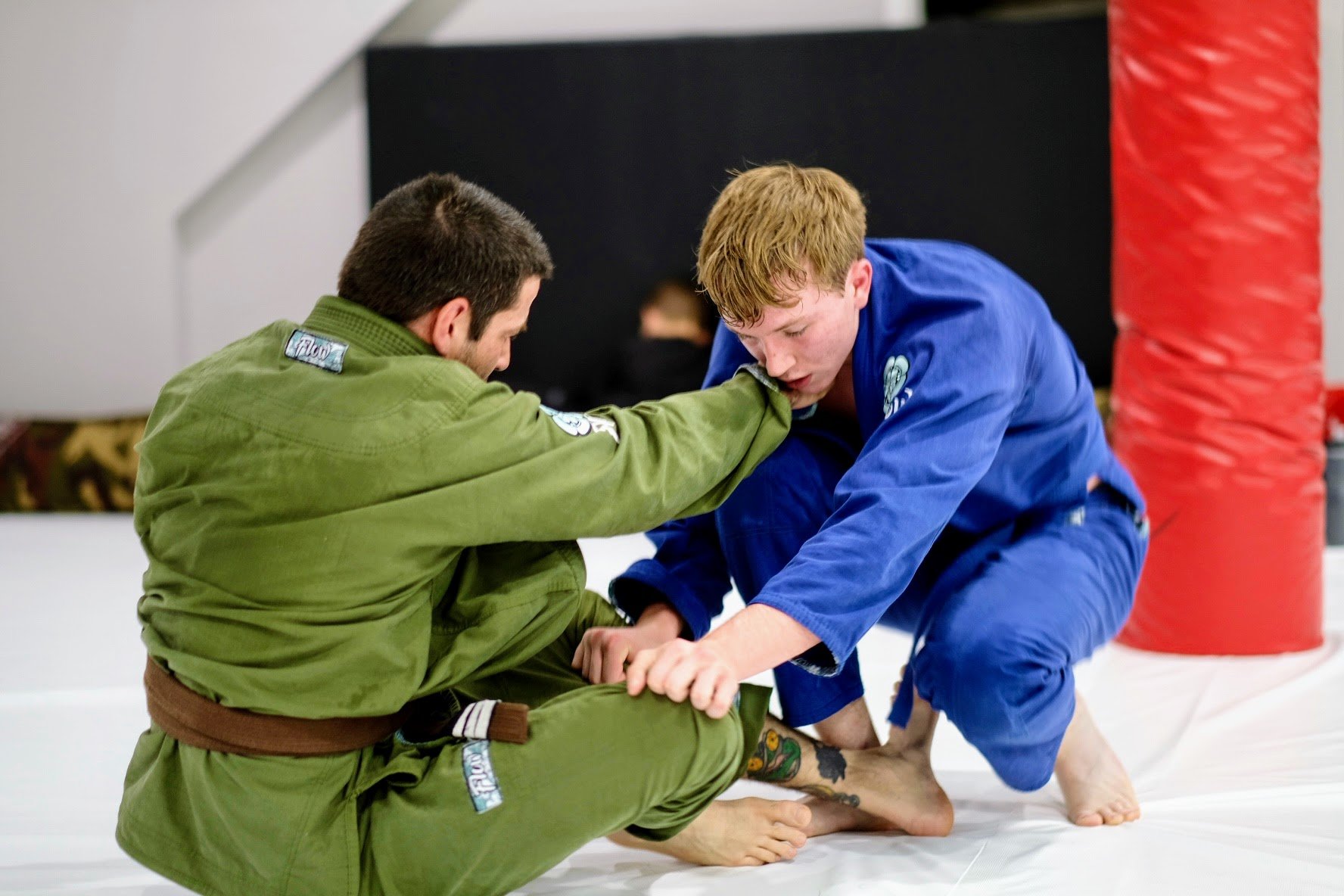
Start where you are.
The hardest belt to get is the white belt, because it means stepping onto the mats for the very first time.
Adult pricing starts at $150 a month. Adult and teen memberships include every class on the schedule. Youth pricing starts at $125 a month. Family, military, and public servant discounts are available. Discuss them during your free trial week.
Programs
Classes
Adult pricing starts at $150 a month. Adult and teen memberships include every class on the schedule. Youth pricing starts at $125 a month. Family, military, and public servant discounts are available. Discuss them during your free trial week.
What happens in class
Five steps. Same standard for everybody.
01
Warm-up
Get the body moving and the blood flowing.
02
Techniques
Learn the moves and understand why they work.
03
Drilling
Repetition builds muscle memory.
04
Positional sparring
Start from a set position and problem-solve.
05
Roll time
Put it all together against a resisting partner.
FAQs
Why should I train BJJ?
People train for different reasons. Self-defense. Time with their kids. Focus and confidence. Getting back in shape. Come try it and see if it fits.
Can I try it out before I commit?
Absolutely. We encourage everyone to come in for free trial week before joining up. Not only does it give you a chance to see what BJJ is all about, it also gives us a chance to see if you’re a good fit for our dojo. Mat space is limited and BJJ is a full-contact sport. We’re looking for new members who are going to look out for their training partners, show respect for training partners and coaches, and follow mat etiquette.
Do I need to get in shape before joining?
Absolutely not. BJJ will get you into shape, and almost nothing you can do ahead of time will get you in the type of shape you’ll be in after a few months of BJJ. We’ve had new members come who are marathon runners, triathletes, body builders, combat veterans, and gymnasts. Any of them will tell you that their first class was like nothing they’d ever done before.
Do I need any prior experience?
Absolutely not. BJJ is for everyone. The only way to get better at BJJ is to do more BJJ, and everyone starts in the same place: at the beginning. Prior experience in a combat sport may mean you’re more comfortable jumping into live rolling, but we’ll work with your level of comfort and experience to make sure BJJ is a good fit for you.
BJJ seems very male-dominated. Should women train?
Women should absolutely train. BJJ uses leverage and technique, so size matters less than skill. We’ll pair you with partners who keep you safe and help you learn.
I'm visiting the area. Can I drop in for a class?
We welcome visitors from all gyms and affiliations. No drop-in fee for two classes or fewer.
Do I have to roll/spar?
Rolling, which means using your skills against a resisting partner, is a fundamental part of practicing BJJ (and where a lot of the fun comes in), but it’s not where everyone should start. We encourage you to only start rolling when you’re comfortable doing so, and if you have any concerns, we’ll be sure to partner you only with people who can help keep you safe and give you room to develop.
Is it safe for my child to train BJJ?
Absolutely. The focus of our youth program is on fun and safety. Beginners start out in our Cubs program, where they learn fundamentals of BJJ like how to get knocked to the ground without getting hurt, before moving up to our Jaguars program. We also have multiple coaches on the mats in our youth classes so we’re able to keep an eye out for everyone’s safety. Our youth program focuses on the core values of discipline, respect, and hard work that gives youth self-confidence and helps prepare them for real life.
How does a typical class work?
Classes begin with warm-ups to get the blood flowing and work on fundamental movements. After that, there is a lesson, where students see moves demonstrated, ask questions, and drill with partners, followed by optional live rolling where students get to use their skills and techniques against resisting partners. We generally roll in five-minute rounds and rotate partners. If you’re newer or less comfortable rolling, we’ll be sure to partner you with people who will help to keep you safe and give you room to develop your skills.
How much does it cost?
Adult pricing starts at $150 a month. Adult and teen memberships include every class on the schedule. Youth pricing starts at $125 a month. Family, military, and public servant discounts are available. Discuss them during your free trial week.
Won't people be trying to hurt me?
BJJ is a form of submission grappling where chokes and joint locks are used to subdue a resisting opponent. Injuries happen from time to time, but in general, you’ll find a group of welcoming training partners who are all trying to have fun while learning the art of Brazilian jiu-jitsu while keeping each other injury-free.
Is it too late for me to start?
“It's not who's good, it's who's left. It's hours on the mat. If you put in that time, natural athlete or not, you'll be a black belt. You're going to be somewhere in ten years, why not be a black belt? You just can't quit.”
BJJ is for everyone. Ask anyone who started later in life, and they’ll most likely tell you their biggest regret is that they didn’t start sooner. The journey from white belt to black belt is different for each person, and any given belt is not a measure of who you can beat, but how far you’ve come from your starting point toward your full potential.
What is mat etiquette?
Mat etiquette is the set of rules, both written and unwritten, spoken and unspoken, that help to maintain a clean and safe environment and show respect for the other members of the dojo. You’ll get a feel for other unspoken rules over time, but here are some of the basics:
- Hygiene is important—wear clean clothes, and if you can, take a shower and brush your teeth before class. Help keep blood off the mats by keeping your fingernails and toenails trimmed.
- Appropriate clothing must be worn. Fingers and toes get caught in pockets, zippers and buttons can cause cuts and bruises. For gi classes you’ll need a gi (kimono), for no gi classes spats, shorts, and a rash guard are highly recommended.
- Remove jewelry and piercings.
- No shoes to be worn on the mats at any time. For Pete’s sake, DO put your shoes on to use the bathroom.
- Don’t train sick. It becomes harder not to train than to train, but please help keep contagious diseases contained by staying at home.
- Show respect for instructors and other students.
- When it comes to rolling, it never hurts to ask your partner how they want to roll. Some people are new to rolling and may just want to work on positions and escapes. Others may have an injury they’re looking to avoid making worse. Some members are older and won’t be able to train as many days a week as they’d like if they roll at 100% effort each and every time.
- Noticing that people don’t want to roll with you? Take a breath and ask how you can be a better partner.
What equipment do I need to buy? Is it expensive?
Initially, nothing other than an open mind, a t-shirt, and shorts. For your free trial week, you’re welcome to borrow a gi for gi classes. Once you enroll, you’ll need your own gi for gi classes, and spats, shorts, and a rash guard for no-gi classes.
Contact Us
Have a question before you come in for your free trial week? Let us know.